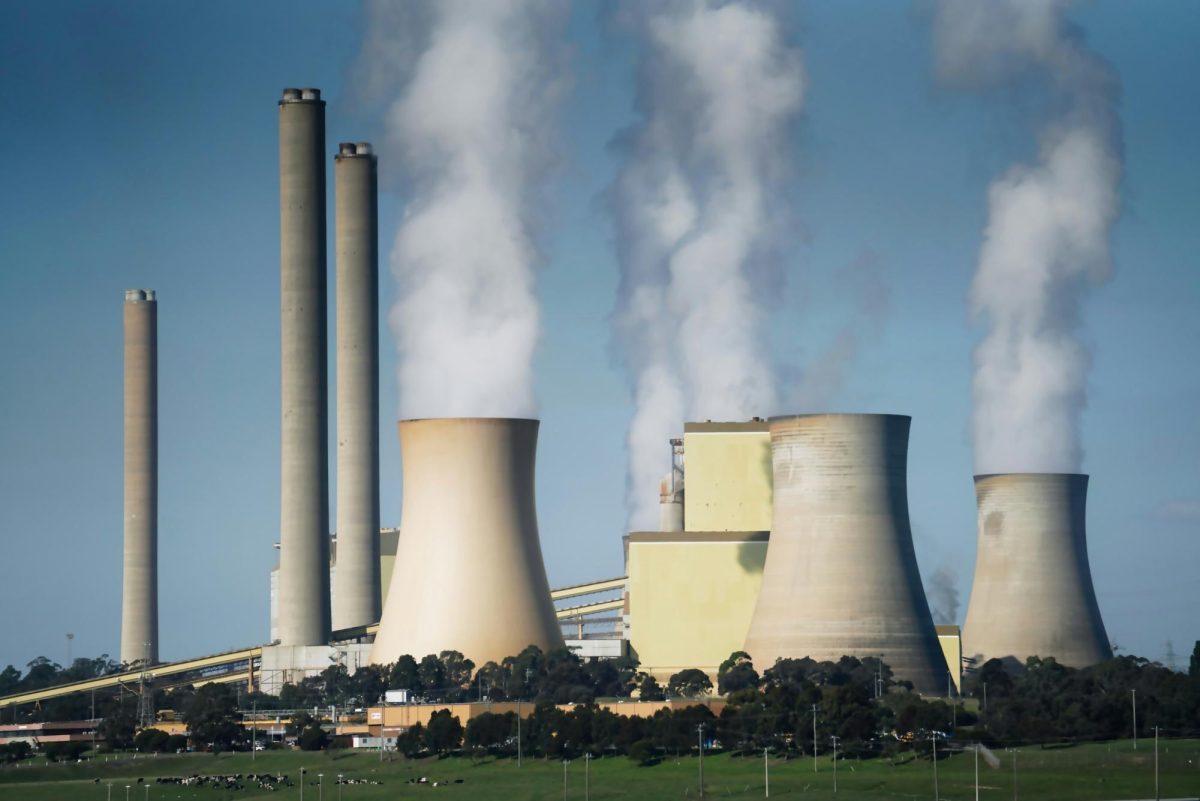
In 2025, Elly Froehlich ‘27 spent between $30 to $40 to fill up her car’s gas tank regularly. A year later, she pays almost $50 and drives from Greencastle to Crawfordsville, Ind. for cheaper gasoline prices, based on her father’s advice.
Froehlich is only one of the students from the DePauw University community impacted by the spike in gas, oil, and fuel prices across Indiana. Average regular gas prices in the state are at $4.722 as of May 7, compared to the national average of $4.558 according to AAA.
“It’s definitely taken some readjustment in terms of how I’m budgeting,” Froehlich said. “It’s just a little bit of, I guess, tension or pressure to factor gas into that.”
Alexis Meyer ‘26, who drives off-campus on a weekly or monthly basis, also observed how Greencastle gas prices were higher than those in Jasper, Ind., her hometown.
“Just looking at like gas prices on the boards that have gone up like by a whole dollar, which adds up really quickly when you’re getting like 10 to 15 gallons every time,” Meyer said.
She added that as a college student without a full-time job, she recognized how frequent drivers might spend a “decent portion of [their] paycheck on just gas alone.”
Statewide gas price hikes also affected DePauw professors’ transportation outside of campus. Bin Qiu, assistant professor of economics and management in finance, shared how he switched from an SUV to a sedan to cut his gas expenses as a resident of Carmel, Ind.
“I used to kind of spend like $80 for a full tank [for a] SUV. But now, if you fill a full tank, you need to spend over $100,” Qiu said.
He emphasized how statewide consumers have likely felt the “salient and immediate” impact of rising gas prices and transportation costs.
Effects of jet fuel price spikes on DePauw’s international students
DePauw University’s international students, who make up 21% of the student population, might also be affected by increasing airfare and jet fuel prices.
Hiram L. Jome Professor of Economics and Management Guangjun Qu shared how rising jet fuel and gasoline prices can impact students who plan to travel back to their home countries or pursue out-of-state summer internships.
“No matter [if] you’re flying or driving, then you probably will feel the [impact], right? The airfare, the tickets, are going to be more expensive,” Qu said.
He added that higher flight expenses can limit the professional opportunities of not just international students but also domestic students. For precaution, Qu advised summer interns to be strategic in finding a residential area and forming a practical transportation plan for off-campus positions.
A bigger picture of Indiana’s oil and gas price hikes
Assistant Professor of Economics and Management Ryan Rudderham explained how Indiana observed an estimated 30% increase in gas prices, which was a “lower average increase” compared to other states.
“We see a larger increase in price than we saw in this original supply shock. And so what that’s telling us is that energy oil prices are inelastic,” Rudderham said. “Prices respond more than the original supply shock, and the reason for that is people have a really hard time changing their behavior. So we’re sort of based on our lifestyle and based on our needs, locked into this consumption pattern.”
For students’ observations on higher gas prices in Greencastle compared to other Indiana cities, Rudderham noted how this phenomenon might be caused by additional transportation costs to distribute resources to gas stations in Putnam County’s smaller, remote location.
On May 6, Indiana Governor Mike Braun implemented a 30-day suspension on the 7% gasoline sales tax across the state, meaning residents can save up to 17 cents per gallon based on the recent executive order.
On top of the sales tax suspension, Gov. Braun also paused the 36-cent-per-gallon excise tax on gas across the state, which can save local motorists about 59.3 cents per gallon.
The myth of “energy independence” for U.S. oil and gas supply
Aside from Japanese, Chinese and several Southeast Asian economies, Qu emphasized how U.S. markets are also significantly influenced by the globalized oil market and Middle East oil exports.
“Sometimes people thought that, oh, okay, [the U.S. is] already kind of energy independent, right?” Qu said. “But that’s actually not the case …when [Asian economies] had trouble [with Middle East oil exports,] then they’re going to try other places, including the U.S. markets. So it’s going to push up the global oil price, regardless of where you live.”
Qiu also shared how the spike in global gas and oil prices is a real-time case study in corporate finance, macroeconomics and behavioral financial economics. The international tensions between Iran and the U.S., along with the Russia-Ukraine war are two developments that Qiu finds crucial to keep track of.
Short-term and long-term solutions for the DePauw community
Both Froehlich and Meyer suggested the implementation of financial literacy programs on campus to help students develop budgeting solutions for the unpredictability of Indiana gas prices.
“Having a resource that can be like, ‘Hey, you might be stressed about (rising gas and oil prices) or … have to change your plan or do something different, but here’s a way to manage that differently, or here’s a way to budget when things are kind of crazy,’” Froehlich said.
Rudderham acknowledged how the rise in national gas and oil prices can feel as if the DePauw community is “suffering together.” But he suggested policy reforms as the first step, in which students can advocate for statewide and national laws supporting energy efficiency and the production of renewable energy.
Meanwhile, Qu shared the importance of energy sustainability on DePauw’s campus.
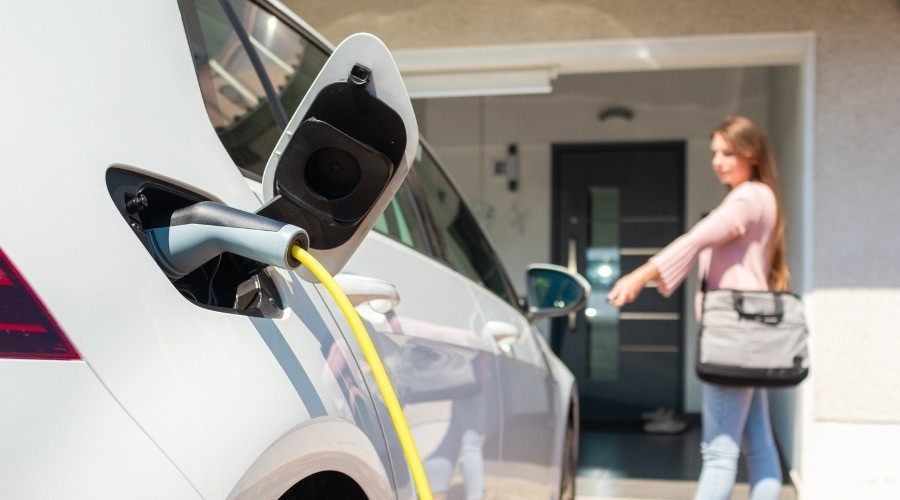
“I’m not using an [electric vehicle (EV)], but I heard, you know, some students, faculty members, my colleagues and staff are talking about … considering having more EV charging stations on campus,” Qu said. “[That would] at least not discourage people to have EVs [at DePauw.]”
He also emphasized the importance of being aware of gas, oil and fuel price developments as members of a highly globalized community.
“Do not feel like, you know, [if] something is happening thousands of miles away, it’s not going to affect you,” Qu said.
He encouraged students to conduct open discussions with DePauw professors and peers, to understand the evolving connection of local gas and oil price hikes with international energy markets and geopolitical relations.