A lot has happened since the United States first reached the moon, especially in terms of technology. Modern smartphones now have more computing power than NASA had in 1969 when astronauts first set foot on the lunar surface. NASA aims to return humans to the moon by 2028, but before humanity can go back, the agency wants to test whether its technology is still capable of sending astronauts via lunar flyby.
The program, later named Artemis, was first announced back in December 2017 when President Donald Trump issued a memorandum directing NASA to return manned missions to the moon to eventually reach Mars. For the 2020 allocations budget, Congress approved an increase in NASA’s budget to $21.5 billion to support expanded human space exploration. In November 2022, Artemis I, the first mission in the Artemis program, launched from Kennedy Space Center in Cape Canaveral, Fla., with the goal of an unmanned lunar orbit. The mission was a success and gave NASA the go-ahead to further its goal of putting mankind back on the moon by 2028.
The Artemis II marks the first crewed mission beyond low Earth orbit since Apollo 17 in 1972. The crew included astronauts Reid Wiseman, the commander of the mission, Victor Glover, the pilot, and two mission specialists, Christina Koch and Jeremy Hansen. The selection of the crew is significant, as Glover has become the first African-American, Koch the first woman, Wiseman the oldest person at 50 and Hansen the first non-American to travel around the moon. This mission also marks the first use of a manned Orion spacecraft, designed for deep space exploration. Built by Lockheed Martin and Airbus Defence and Space, the spacecraft is equipped with solar panels to help charge the crew and service modules, something unprecedented when it comes to manned lunar missions. The spacecraft also includes an automatic docking system to allow Orion to rendezvous with other vehicles and a glass cockpit featuring an array of digital flight instrument displays rather than an analog system used during the Apollo missions.
The mission launched successfully from Block 1 of the Kennedy Space Center on April 1. As the core engines ignited and the two solid rocket boosters (SRBs) fired, Artemis II was well on its way to the moon. Two minutes into launch, the SRBs burned out and jettisoned, falling back into the ocean, leaving only the core engines burning. After eight minutes, the four main engines shut down and separated, leaving only Orion’s upper stage, powered by a single engine, to continue on an Earth orbit trajectory. The crew had little time to rest after the launch, as checking life support systems and configuring the cabin to spaceflight conditions were necessary in order to ensure a successful mission. Even the tiniest slip-up in operations can turn the mission into a complete disaster.
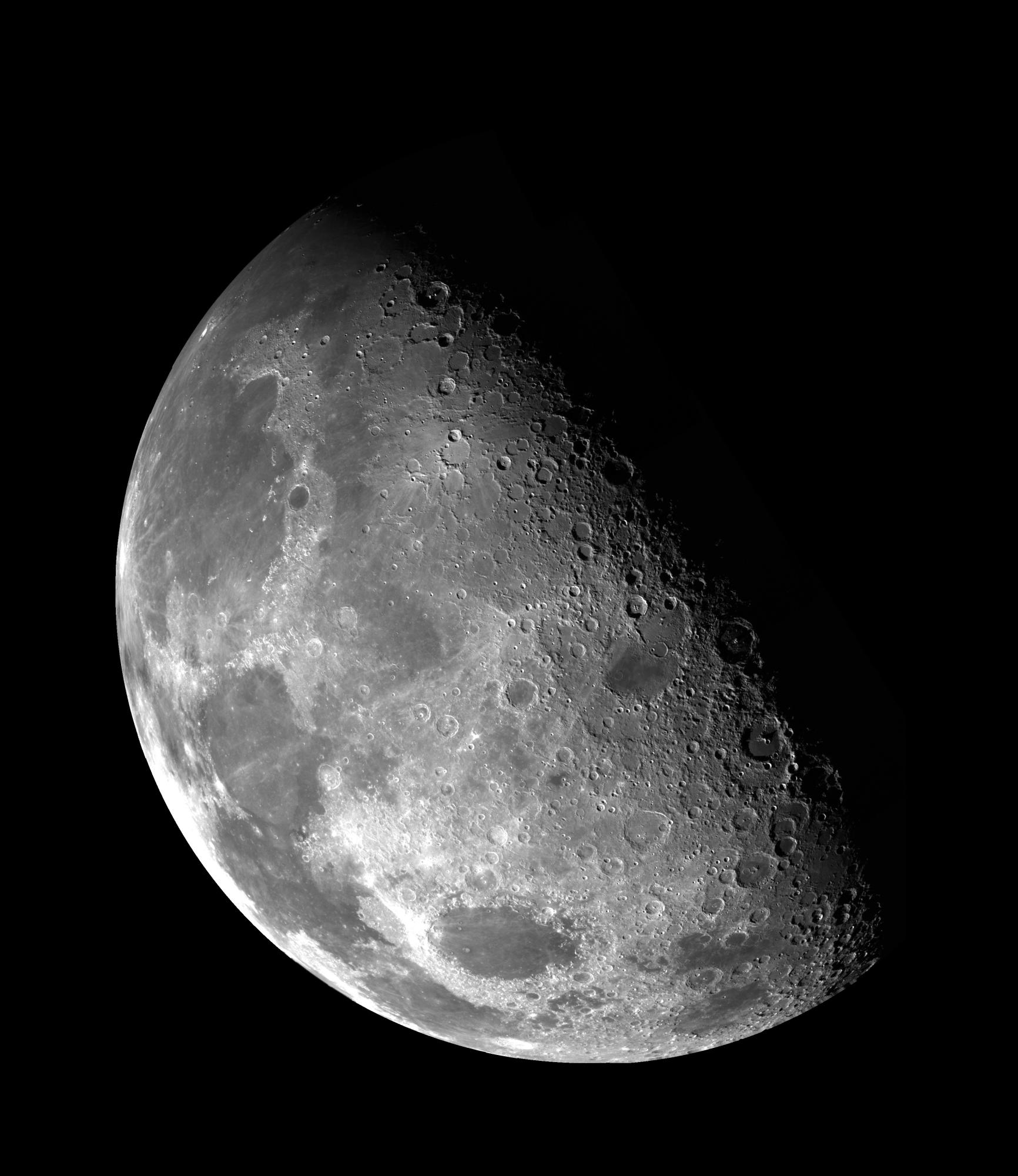
On April 2, after a quick burn to intercept the moon, the Orion was sent hurling into space. The goal of the mission was not to orbit the moon like in Artemis I but rather to return to Earth on a free-return trajectory. This means that Artemis II must be precise in its maneuvers and not use up any major burns, since it will fall back to Earth naturally, using the moon’s gravitational field. Orion’s closest approach to the moon came on April 6, with it being approximately 5,000 miles above the lunar surface. After being in space for 10 days, Artemis II will splash down in the Pacific Ocean on April 10, where the U.S. Navy plans to retrieve it.
The crew of Artemis II is laying down their lives for humanity’s most honorable goal: the pursuit of truth and understanding. We wish them well as they embark on a giant leap for mankind.