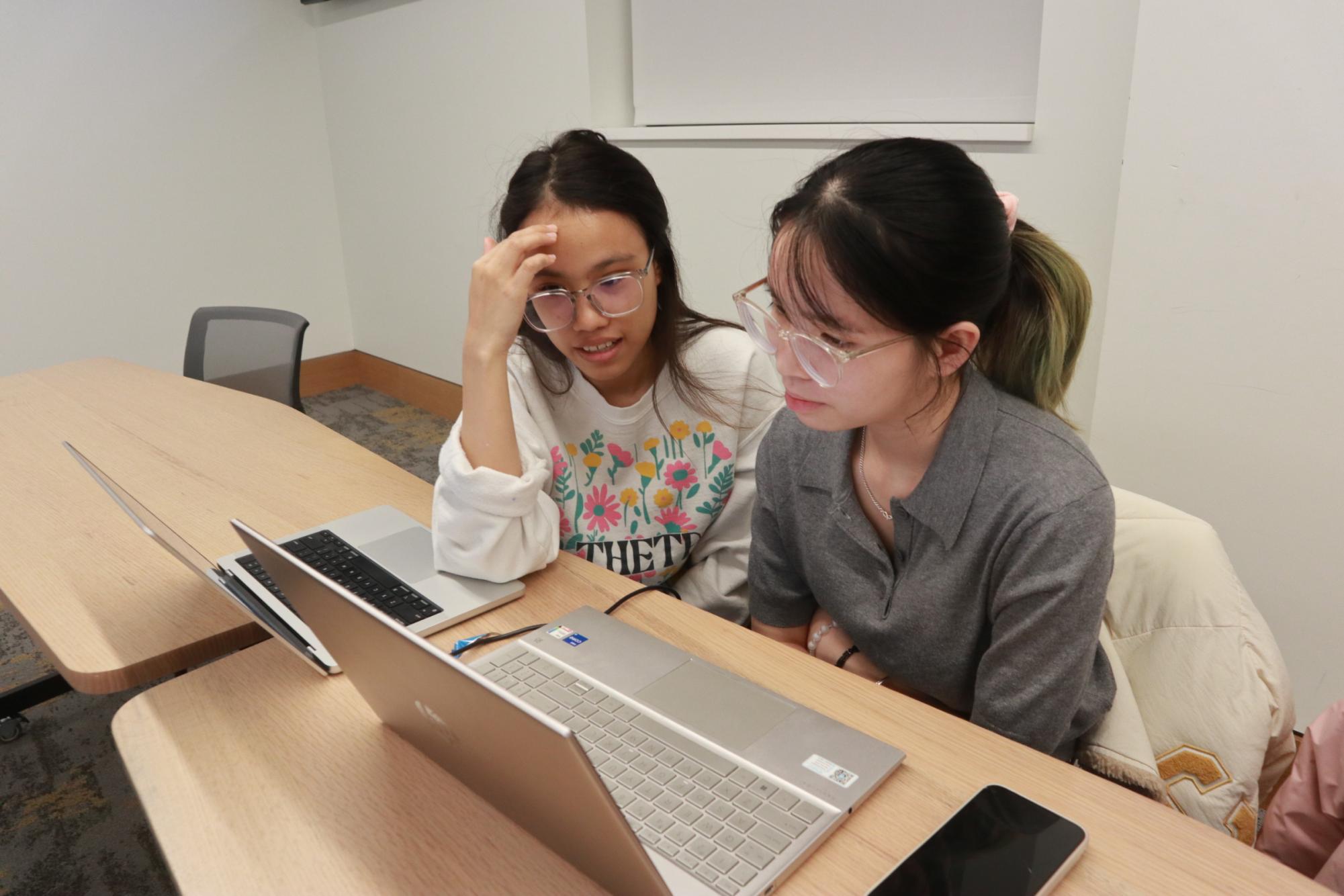
“I tried to imagine explaining the concept to myself when I was younger,” WiCS technical advisor Khue Doan ‘27 shared. As a former summer intern at Google, she shared her past experiences of practicing LeetCode daily and has successfully mastered her computational skills while translating the concepts of LeetCode to her own style of language. Last Wednesday, Nov. 12, WiCS hosted a bi-weekly LeetCode Workshop with Binary Research, featuring three levels: easy, medium and hard.
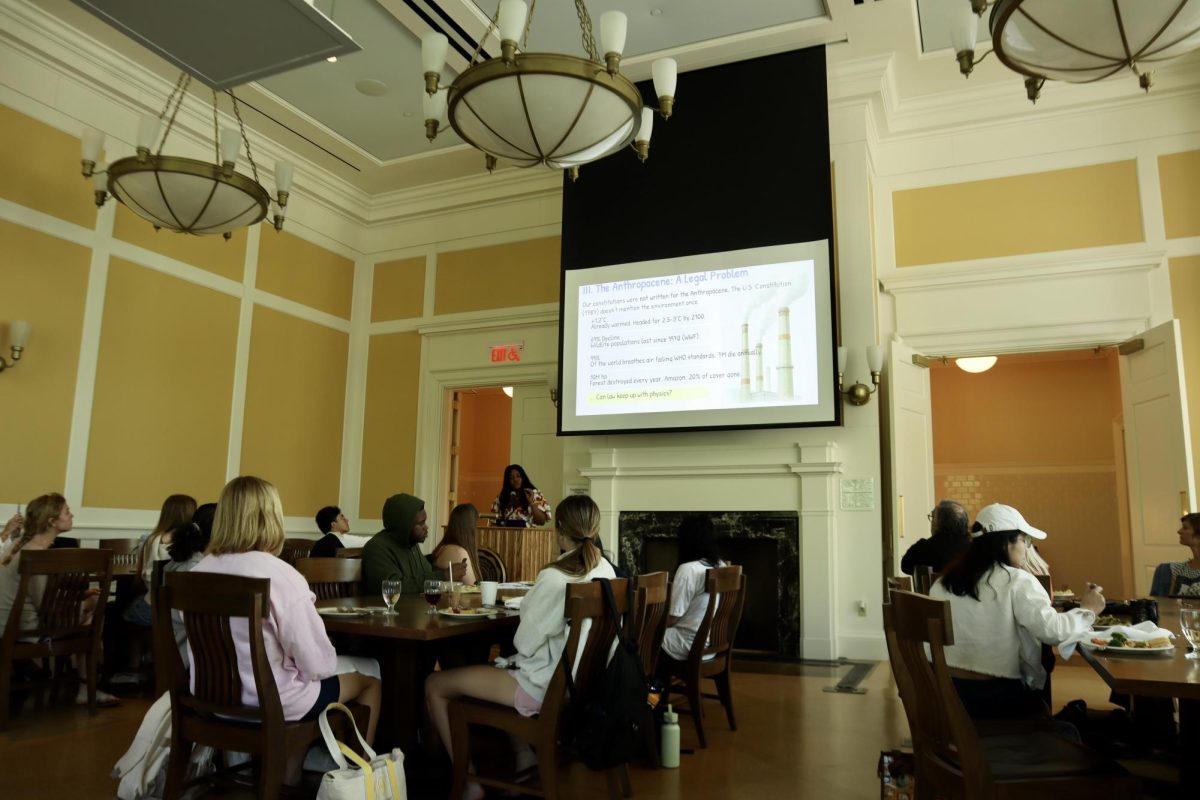
The workshop operates like a mini-tutor class, with presentation slides that explain binary research. Starting with the event, Uyen Ngo ‘28,WiCS technical advisor,taught the basic concepts of binary research and helped peers solve binary research problems on LeetCode, an online platform that offers coding challenges to help people practice data structures, algorithms, and technical interview skills.
Ngo explained that binary search is a computer science algorithm that can be used to find the position of a target value within a sorted array. It works by repeatedly halving the search interval and is more efficient than a linear search for large datasets.
An algorithm maintains a[lo] <= value <=a[hi]. Doan hinted that we should have a strategy and having a basic idea of how the algorithm works is crucial.
When Ngo first started coding, she felt a bit overwhelmed because the process of solving a specific problem was very time-consuming. As she went through the steps, she improved significantly and completed the trick problem. Hence, the process requires a lot of computational thinking skills, but now she has mastered it.
The workshop covered three LeetCode problems, including Search Insert Position. Doan shared that she chose this topic because it is beginner-friendly. “The process of going through this practice was trying to imagine explaining the concept to myself when I was younger. Then try to present a problem in a relevant real-world situation,” Doan conveyed.
Doan shared, “ My favorite language is Python because of its flexibility and simplicity to learn. It’s also good for interviews because we don’t have to remember a lot of syntax. Another advice for students who are interested in LeetCode and want to start coding on LeetCode is to first have a plan, then go through one topic at a time and try to understand the pattern of each topic—LeetCode is all about the recognition of patterns.”
The President of WiCS, Leonie Nguyen ‘27, shared that her vision for WiCS this year is to build a computer science community where students can share common interests and support one another. During her freshman and sophomore years, WiCS helped her adjust to and navigate her career plans, providing advice on course choices, internship searches, and networking opportunities. As a former member before becoming president, she stated that her coding and interpersonal skills have grown significantly throughout the WiCS workshop and panel discussions.
By the end of the workshop, it was clear that the session’s value went beyond solving a few LeetCode problems. What really stood out was the way students encouraged one another, shared small victories, and admitted moments of confusion without hesitation. Doan and Ngo’s stories—of feeling overwhelmed, of practicing daily, of slowly finding confidence—made the room feel less like a lecture and more like a group of friends figuring things out together. As WiCS continues building this community, workshops like this remind students that learning computer science isn’t just about algorithms; it’s about finding people who help you believe you can keep going.