Former President Theodore Roosevelt once said, “Speak softly and carry a big stick” — this was the cornerstone of America’s foreign policy throughout the 20th century. In other words, use diplomacy first, but be ready to use military force if necessary.
While Roosevelt’s term has long since ended, this philosophy of strategic deterrence has endured for the last 100 years and into the 21st century. Both Republicans and Democrats have used methods of force to shape their foreign policy: Clinton in the Balkans, Bush in Iraq, Obama in Syria and so on. President Donald Trump is no exception to this strategy of foreign policy, coining former President Ronald Regan’s use of the phrase “Peace through Strength.” In contrast, critics argue that the previous administration under former President Joe Biden lacked strength on the international stage.
Biden spoke softly but carried a little stick. Many skeptics scrutinized the previous administration’s foreign policy, which failed to project strong strategic pressure and drew criticism from both sides of the aisle. For example, the rapid withdrawal from Afghanistan allowed the Taliban to regain control of the country. The ongoing conflict between Russia and Ukraine unfolds as many European members of NATO spend less on defense than the alliance’s recommended target. In addition, the easing of sanctions on Iran after unfreezing $6 billion worth of Iranian oil revenue as part of a prisoner exchange deal caused adversaries to question the United States’ dominance on the world stage. Countries like Russia and China began to ask, “How can I make the most of this weak deterrence?”
Following Trump’s inauguration, everything was flipped on its head regarding foreign policy. In 2025, Trump told Europe that it needed to up its defenses if it wanted to be part of the alliance. Europe obliged, all NATO members having met their defense budget target of at least 2% of GDP, with a 3.5% increase in GDP targeted for 2035. While the Russo-Ukrainian war continues, a fortified and well-armed Europe would likely aim to keep Russia at bay.
Near the end of Trump’s first term, the Abraham Accords — a Middle Eastern peace agreement signed by Israel, the United Arab Emirates (UAE), Bahrain, Sudan and Morocco — sought to open diplomatic negotiations and normalize economic and security relations in the region. Back in October, Trump negotiated a ceasefire to the Gaza war, and earlier in September, he announced a 20-point peace plan to bring an end to the war. In January, the final phase of the plan commenced, with the main goal being “demilitarization, security measures, governance and reconstruction” in the area. However, airstrikes continue over Gaza, and the humanitarian crisis is not yet resolved, despite reports claiming that full-scale fighting has ceased.
In addition, the capture of Venezuelan President Nicholas Maduro sent shockwaves throughout the world, and it sent an intentional message: the United States is not a country to be messed with. One of Trump’s core campaign promises, even going back to his 2016 victory, was to limit the amount of drugs coming into the United States. Reports claimed that Maduro’s family had for a long time been associated with drug cartels that had been illegally smuggled into the US. With the Venezuelan government reluctant to cut ties with the drug cartels, the administration sent a signal to Venezuela and the rest of the world. “We’re a superpower. And under President Trump, we are going to conduct ourselves as a superpower,” said Deputy Chief of Staff Stephen Miller, following the removal of Maduro. Trump’s reassertion of the Monroe Doctrine and recognition of opposition leader Edmundo González deters the ever-growing presence of China and Russia in the Americas.
The most dominating headline in the news recently regarding Trump’s foreign policy is his handling of Iran’s development of nuclear weapons. The U.S. Department of State took a hardline stance on Iran during Trump’s first term, withdrawing from the Iran Nuclear deal in 2018 and killing Iranian General Qasem Soleimani in 2020. Following Trump’s return to power, he continues to assert his “maximum pressure” policy, including sanctions on Iranian oil exports and on banks. The most heavy-hitting pressure came in the summer of 2025. Last July, the US conducted strikes on several Iranian nuclear sites, reportedly setting back Iran’s nuclear program two years. Iran’s foreign minister at the time said that the attacks “heavily and seriously damaged” the nuclear sites. On Feb. 28, 2026, the United States, alongside Israeli forces, attacked Iran with the focus of regime change, killing the Supreme Leader of Iran, Ayatollah Ali Khamenei, in a coordinated attack, “Operation Epic Fury.” The world waits to see what happens next.
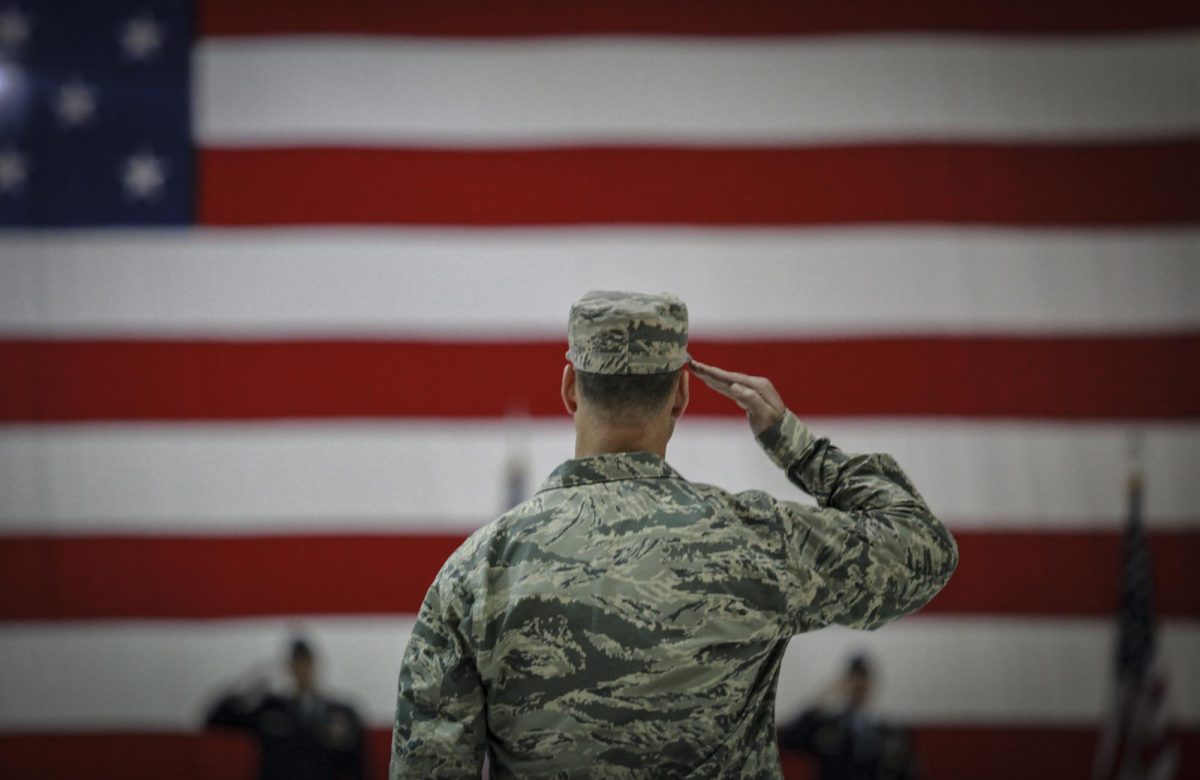
The reliance on military power to maintain force is nothing new in U.S. foreign policy, but Trump’s reassertive position on it makes him stand out from other presidents, and it sure is effective. Trump’s vision of “peace through strength” has reassessed the international community’s view of the United States as the world’s top hegemonic power. While diplomacy should always be put at the forefront of America’s foreign policy, strength and assertion must also be as ready as ever, even if war is on the table. The U.S.’s current approach thus reflects what Roosevelt once said: “No triumph of peace is quite so great as the supreme triumphs of war.”